
Breaking: New Victims Added to Highway of Tears Investigation List
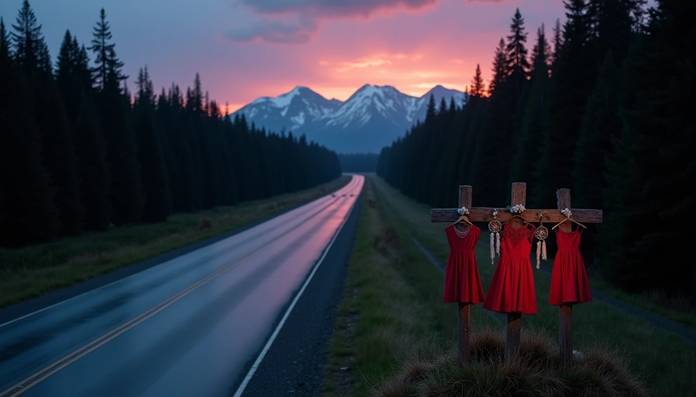
The highway of tears victims list continues to grow as new cases are added to this tragic ongoing investigation. We’re tracking developments along this infamous 450-mile (724-km) stretch of Yellowhead Highway 16 in British Columbia, Canada, where numerous women have disappeared or been murdered over decades. According to the Royal Canadian Mounted Police, eighteen women vanished in the area between 1969 and 2006. However, local Indigenous communities dispute this figure, claiming the actual highway of tears number of victims is closer to fifty.
Most of these highway of tears murders remain unsolved by 2024, leaving families devastated and communities demanding justice. The victims are predominantly Indigenous women and girls, with more than 40 people affected in recent decades. In fact, the federal government launched a national inquiry into these cases in 2015, though progress has been painfully slow for many families. The human toll is devastating—like in the case of 18-year-old Jessica Patrick, whose body was found near a lookout spot close to the highway in 2018.
Families of New Victims Demand Answers and Action
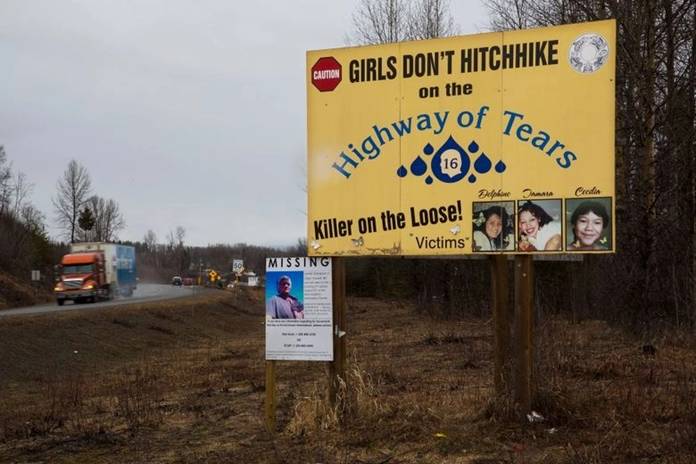
Image Source: The Seattle Times
Desperate families continue to search for answers as the highway of tears victims list grows longer. Relatives of those lost along this notorious stretch of road are increasingly vocal about the lack of progress in solving these cases, with many taking matters into their own hands.
Who are the families speaking out?
Jacquie Bowes has been raising awareness since her cousin Jessica Patrick, an 18-year-old Lake Babine First Nation member, was found murdered in 2018[1]. Mathew Jefferson holds vigils for his aunt Frances Brown who vanished off Highway 16 in 2017 [1]. Additionally, Kayla Mitchell organizes events in memory of her family member Ramona Wilson, who disappeared at age 16 near Smithers in 1994 and whose body was found a year later [1].
Gladys Radek, whose niece Tamara Lynn Chipman disappeared in 2005, completed her seventh and final 350-kilometer walk along the Highway of Tears in 2017 [2]. For many families like Doug Leslie’s, whose 15-year-old daughter Loren was murdered near Vanderhoof, the pain never subsides. “Every day I wake up thinking about Loren. Every night I go to sleep thinking about Loren,” he shared [2].
What are their concerns about the investigation?
Families express profound frustration with investigations that seem to stall or receive inadequate attention. “Families are still printing their own posters, families are still paying their own gas, families are still struggling to find their missing loved ones,” said Meggie Cywink, an MMIWG family member [3].
Mike, Jessica Patrick’s father, believes systemic racism plays a role in how cases are handled. “The RCMP are white. They’re racist and they don’t give a bleep for Aboriginal people,” he stated while conducting his own investigation into his daughter’s death [4]. Many families report being excluded from discussions about their loved ones’ cases, with Gladys Radek noting, “You can’t leave the families out and make decisions on our behalf” [5].
How are they organizing for justice?
Determined to be heard, families have mounted grassroots campaigns for justice. Mathew Jefferson walked across Canada to raise awareness about his missing aunt [1]. Other families hold regular vigils along Highway 16, displaying pictures of their loved ones [1].
Some relatives, like Dawn and Eldon Scott, create their own investigation boards tracking people, timelines, and movements related to their daughter’s disappearance [2]. Meanwhile, a coalition of families is pushing for the implementation of the from the national inquiry 231 Calls for Justice[3] and the recommendations from the 2006 Highway of Tears Symposium [2].
Indigenous communities have also launched a billboard campaign to reframe the narrative, emphasizing hope rather than despair. “We really want to switch the message and the narrative that has been going on about this place of despair and loss and pain,” explained Julie Daum of Carrier Sekani Family Services [6].
Colonial Legacy Fuels Ongoing Violence Against Indigenous Women
The devastating pattern of highway of tears murders has deep roots in Canada’s colonial history. These crimes against Indigenous women represent not isolated incidents but the continuation of historical injustice that began centuries ago.
How did the Indian Act and residential schools contribute to current issues?
The Indian Act of 1876 fundamentally undermined Indigenous women’s status by stripping them of rights and identity based on marriage to non-Indigenous men [7]. This legislation dismantled traditional matrilineal systems where women held prominence, replacing them with European patriarchal structures [8]. Furthermore, the residential school system, operating from the 1870s until 1996, forcibly removed from their families over 150,000 Indigenous children[4]. These institutions prohibited traditional languages and cultural practices, essentially attempting to erase Indigenous identity [9].
What intergenerational trauma persists today?
The trauma from these colonial policies continues across generations. Research shows children with parents who attended residential schools face increased risk of suicidal thoughts and attempts [10]. Consequently, many communities struggle with elevated rates of substance abuse, as survivors and their descendants attempt to cope with unresolved trauma [11]. Indigenous children currently represent less than 8% of children under 14 in Canada yet make up nearly 54% of children in welfare care[12].
How does this history connect to the Highway of Tears murders?
The highway of tears victims list reflects this ongoing legacy. Colonial violence targeted Indigenous women specifically because of their ability to sustain tribes through childbearing [13]. Today, Indigenous women experience sexual violence at devastating rates—more than half during their lifetimes [13]. Poverty resulting from historical discrimination forces many to hitchhike along Highway 16, primarily because vehicle ownership remains low and public transportation is limited [14]. This vulnerability, coupled with systemic racism in law enforcement response, creates the perfect conditions for the highway of tears murders to continue unchecked.
Police Accountability Questioned Amid New Revelations
Serious allegations of police misconduct cast a shadow over investigations into highway of tears murders, raising troubling questions about accountability. These claims compound the grief of families seeking justice for victims on the growing list.
What are the allegations of misconduct or neglect?
Human Rights Watch of rights of indigenous women and girls, including young girls being pepper-sprayed and Tasered, a 12-year-old attacked by a police dog, and a 17-year-old punched repeatedly by an officer documented disturbing violations[2]. Moreover, women reported being strip-searched by male officers [2]. Perhaps most alarming are allegations of rape and sexual assault by RCMP officers, including from a woman who described being taken outside town, raped, and threatened with death if she spoke out [2].
Have any officers been investigated or disciplined?
Despite these serious claims, investigations have been limited. The that oversees Canada’s national police force announced it would investigate allegations civilian watchdog[15]. Nevertheless, critics note that complaints typically fall to the RCMP itself [2]. E-PANA investigators claim they collect DNA from police officers when necessary [16], yet no public records show officers disciplined for misconduct related to highway of tears victims.
What reforms have been proposed or implemented?
Recommendations include establishing a Greater Vancouver regional police force [17], implementing mandatory training regarding vulnerable community members [17], plus creating civilian oversight bodies with jurisdiction to investigate police misconduct [18]. Primarily, advocates call for expanding the Independent Investigations Office mandate to include sexual assault allegations against officers [19].
Indigenous Communities Lead the Fight for Justice and Reform
Indigenous organizations are taking powerful action as the highway of tears victims list continues to expand. Beyond waiting for government responses, communities have launched their own initiatives to seek justice and prevent further tragedies.
What grassroots efforts are underway?
The Calls for Justice program oversees the Highway of Tears Initiative, addressing historical issues of women missing along the Highway 16 corridor [20]. This program works alongside the Highway of Tears Governing Body, which represents families of those lost [21]. Additionally, Indigenous families established “Drag the Red,” a community initiative where volunteers search the Red River in Winnipeg after police refused to do so following Tina Fontaine’s death [22].
Families have organized search parties, printed posters, provided accommodation for searchers, built investigation boards, and raised funds—all without institutional support [22]. Primarily, they’ve created the Highway of Tears Governing Body to implement the 33 Highway of Tears Recommendations and the 231 Calls for Justice from the National Inquiry [20].
How are survivors and advocates raising awareness?
Gladys Radek, known as a “carrier of stories,” completed five walks across Canada, each approximately 7,500 kilometers[22]. Throughout these journeys, she recounts women’s stories and posts their pictures, keeping their memories alive. Altogether, these walks represent just one approach among many:
- Annual Sisters in Spirit vigils organized by Iskwewuk E-wichiwitochik (Women Walking Together) [22]
- Memorial billboards installed along Highway 16 featuring Indigenous artists’ work [23]
- Cell tower installation following community advocacy to eliminate 911 dead zones[24]
What role does media and art play in the movement?
Carrier Sekani Family Services is creating “We are Hope, We are Strength,” a film series highlighting resilience in Indigenous communities [20]. Artists Against Racism installed billboards featuring works by Indigenous artists like Maxine Noel’s “Not Forgotten” [23]. Notably, the National Inquiry called upon media to “take decolonizing approaches to their work” and “ensure authentic representation of Indigenous women” [18].
Indigenous artists use their work as platforms for both healing and awareness. As one artist explains, “The ultimate goal of art in the MMIWG2S+ movement is to accurately represent and tell the stories of our stolen relatives” [3].
Conclusion
The Highway of Tears investigation stands as a painful reminder of Canada’s failure to protect Indigenous women and girls. Throughout decades, families have endured not only the loss of their loved ones but also systematic neglect from authorities tasked with solving these crimes. Consequently, the true number of victims likely exceeds official estimates, with Indigenous communities maintaining that have disappeared or been murdered along this notorious stretch of road.approximately fifty women
Above all, this tragedy cannot be separated from Canada’s colonial history. The dismantling of Indigenous social structures through the Indian Act and residential schools created vulnerabilities that persist today. Therefore, any meaningful solution must address these deep-rooted historical injustices rather than merely treating symptoms.
Families refuse to remain silent despite institutional indifference. Instead, they organize walks, create investigation boards, conduct independent searches, and demand implementation of the 231 Calls for Justice. Their determination reveals both tremendous resilience and the ongoing failure of government systems.
Police accountability remains equally critical. Allegations of misconduct, including disturbing claims of abuse against Indigenous women by officers themselves, undermine trust in those sworn to protect. Nevertheless, Indigenous communities continue leading reform efforts through grassroots initiatives like the Highway of Tears Governing Body.
Undoubtedly, the story of the Highway of Tears represents both unbearable tragedy and remarkable courage. As awareness grows through community advocacy, art installations, and media representation, we witness Indigenous communities reclaiming their narrative. Though justice has been painfully slow, their voices grow stronger each year, transforming grief into powerful calls for systemic change that can no longer be ignored.
Key Takeaways
The Highway of Tears investigation reveals systemic failures in protecting Indigenous women, with communities leading their own fight for justice while authorities fall short.
• The victim count is disputed: Police report 18 women disappeared between 1969-2006, but Indigenous communities estimate closer to 50 victims along Highway 16.
• Colonial history fuels ongoing violence: The Indian Act and residential schools dismantled Indigenous women’s traditional status, creating generational trauma that persists today.
• Families are conducting their own investigations: Frustrated with police inaction, relatives print posters, organize searches, and create investigation boards without institutional support.
• Police accountability remains questionable: Serious allegations include misconduct and sexual assault by RCMP officers, yet few investigations or disciplinary actions have occurred.
• Indigenous communities drive reform efforts: Through grassroots initiatives like memorial walks, billboard campaigns, and the Highway of Tears Governing Body, communities demand implementation of 231 Calls for Justice.
This tragedy represents both Canada’s failure to address colonial violence against Indigenous women and the remarkable resilience of communities refusing to let their loved ones be forgotten.
References
[3] – https://www.cnay.org/wp-content/uploads/2022/05/Using-Art-for-Activism-Toolkit-4.pdf
[5] – https://www.cbc.ca/news/indigenous/mmiwg-highway-of-tears-afn-1.6748028
[6] – https://www.cbc.ca/news/canada/british-columbia/new-mmiwg-billboards-1.6937402
[7] – https://www.oas.org/en/iachr/reports/pdfs/indigenous-women-bc-canada-en.pdf
[8] – https://indigenousfoundations.arts.ubc.ca/marginalization_of_aboriginal_women/
[9] – https://pmc.ncbi.nlm.nih.gov/articles/PMC9895934/
[10] – https://www.cbc.ca/news/health/residential-schools-intergenerational-trauma-kamloops-1.6052240
[11] – https://helpstartshere.gov.bc.ca/blog/indigenous-perspectives-trauma-and-substance-use
[12] – https://thecanadianencyclopedia.ca/en/article/intergenerational-trauma-and-residential-schools
[13] – https://www.publichealth.columbia.edu/news/colonial-roots-violence-against-native-american-women
[14] – https://en.wikipedia.org/wiki/Highway_of_Tears
[18] – https://highwayoftears.org/231-calls-for-justice/
[19] – https://www.hrw.org/news/2013/02/13/canada-abusive-policing-neglect-along-highway-tears
[20] – https://highwayoftears.org/projects/
[21] – https://www.csfs.org/callsforjustice
[24] –https://www.cbc.ca/news/canada/british-columbia/highway-tears-cell-towers-1.7420735